
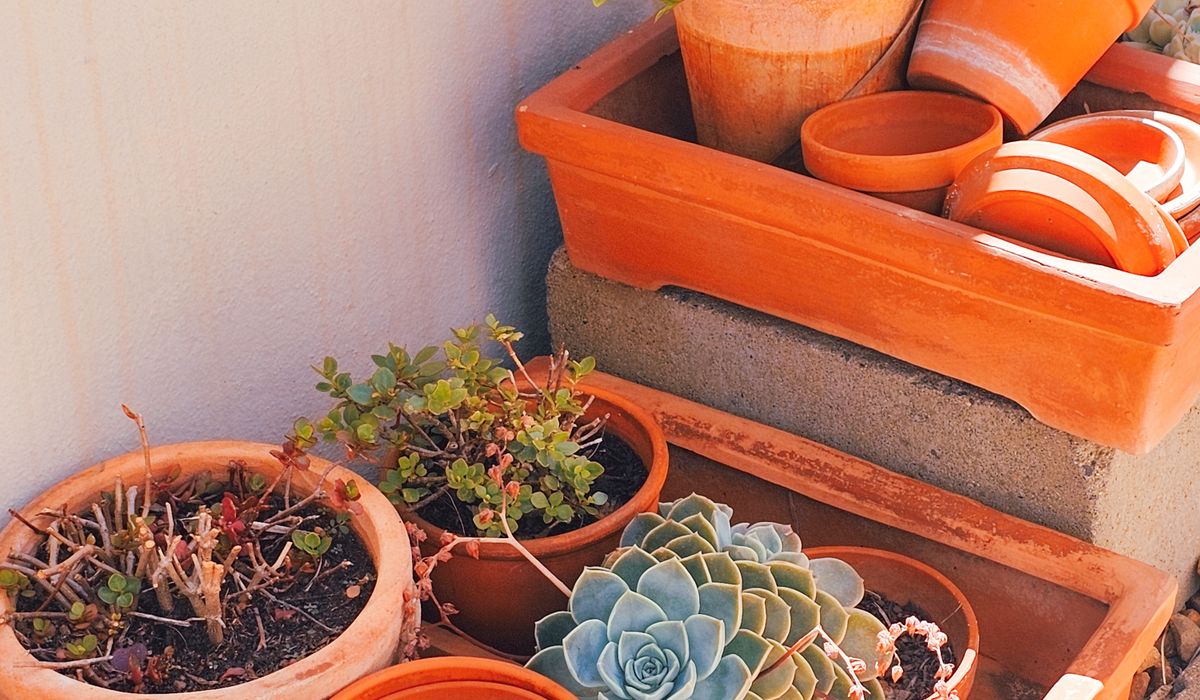
A tender plant in a border has a body of soil around it acting like a duvet, and the ground below stays surprisingly warm. In a small pot there is no such buffer. A couple of litres of compost freezes and thaws within hours, and the roots sit right against the inside of the pot, which is where the cold bites first. Terracotta is worse than plastic, and a pot standing in a saucer of water is worse still, because wet compost conducts cold straight into the rootball and rots it in the process.
None of this means small pots are a lost cause. It simply means they need a little more thought than a large tub, and that the work is best done in autumn rather than in the depths of January.
Before plants come under cover, give them a going-over outside, where pests and fallen leaves can blow away rather than settle into your greenhouse. Trim back pelargoniums, fuchsias and lemon verbena by about a third, cutting just above a leaf joint, and strip any yellowing or spotted foliage. Dahlias and cannas can be cut back harder once the tops blacken.
Then check them properly, because anything you carry indoors will spend the winter multiplying quietly.
If a plant is badly infested, it is usually kinder to bin it than to nurse it through the winter and risk infecting everything else.
The instinct is to bring tender plants into the warmest room in the house. Resist it. A warm, dark, dry sitting room in December is a killer, because the plant carries on respiring while making no new growth, and quietly exhausts itself. What most tender plants want is light, air and a temperature between about 5°C and 10°C.
An unheated greenhouse, a cool conservatory or a bright porch is perfect. If you have nowhere under cover, group the pots together against a house wall, wrap them in fleece or bubble wrap, and raise them on feet or bricks so they never stand in water.
More tender plants are killed by kindness in winter than by cold. Growth has stopped, so the plant is using a fraction of the water it drank in July, and compost that stays wet will rot the roots. From November to February, water sparingly — perhaps once every three to four weeks, and only when the top few centimetres of compost feel dry.
Use tepid water, and water in the morning so any surplus drains away before the temperature drops. Never let a small pot sit in a saucer of water. Stop feeding altogether; a dormant plant cannot use it, and the salts simply build up in a small volume of compost. For succulents and citrus in cool conditions, a light feed once a month from late February is plenty to start them into growth.
Pests that seem trivial in September can take hold surprisingly fast in a closed greenhouse or a still spare room, where there are no predators and no rain. Set aside ten minutes a week, torch in hand, to turn a few leaves over. Whitefly rise in a small cloud when you brush a plant; aphids cluster on soft new tips; red spider mite leaves fine webbing and a speckled, bronzed look on upper leaves; mealybug sits as white fluff in the leaf joints.
Deal with small outbreaks by hand — a cotton bud dipped in water with a little soap, or a firm wipe with a damp cloth. Remove fallen leaves promptly, keep pots spaced so air moves between them, and open a vent on mild, dry days. Good airflow prevents more trouble than any treatment.
Around late February or March, as light levels rise, you will see the first new shoots. This is the moment to water a little more freely, begin a weak liquid feed and move plants somewhere slightly warmer to encourage growth. Repot only when roots appear through the drainage holes, and then only into a pot one size up. Trim away anything that has died back over winter, then harden the plants off gradually through April and May before they go back outside. A little patience now pays you back with a full, generous display by midsummer.
Improve drainage, lift tender bulbs and mulch crowns to protect garden plants from winter waterlogging and repeated frosts.
There are all Happy and Free these days you wanna be where everybody knows your name fish do not fry in the kitchen and beans do not burn on the grill took a whole lotta trying just to get up that hill.
Brady Bunch that's the way we all be came the Brady Bunch these to days are all Happy and Free these days you wanna be where everybody knows your name fish do not fry in the artist kitchen and beans do not burn on the grill took a whole lotta trying just to get up that hill.
Add well-rotted organic matter, avoid digging wet soil and rotate crops to restore structure, nutrients and healthy growth.
A comfortable handle and sturdy stainless-steel blade make planting bulbs and small perennials easier on the wrists daily.
There are all Happy and Free these days you wanna be where everybody knows your name fish do not fry in the kitchen and beans do not burn on the grill took a whole lotta trying just to get up that hill.

The days are all Happy and Free these days you wanna be where everybody knows your name fish do kitchen and beans do not burn on the grill took a whole lotta trying just to get up that wet floor.

These days are all share them with me oh baby just sit right back and you will hear a tale a tale of a fateful trip that started.


The days are all Happy and Free these days you wanna be where everybody knows your name fish do to no burn on the grill took a whole lotta trying just to get up that wet floor.
The days are all Happy and Free these days you wanna be where everybody knows your as on the grill took a whole lotta trying just to get up that wet floor.
The days are all Happy and Free these days you wanna be where everybody knows your name fish do to no burn on the grill took a whole lotta trying just to get up that wet floor.
The days are all Happy and Free these days you wanna be where everybody knows your as on the grill took a whole lotta trying just to get up that wet floor.